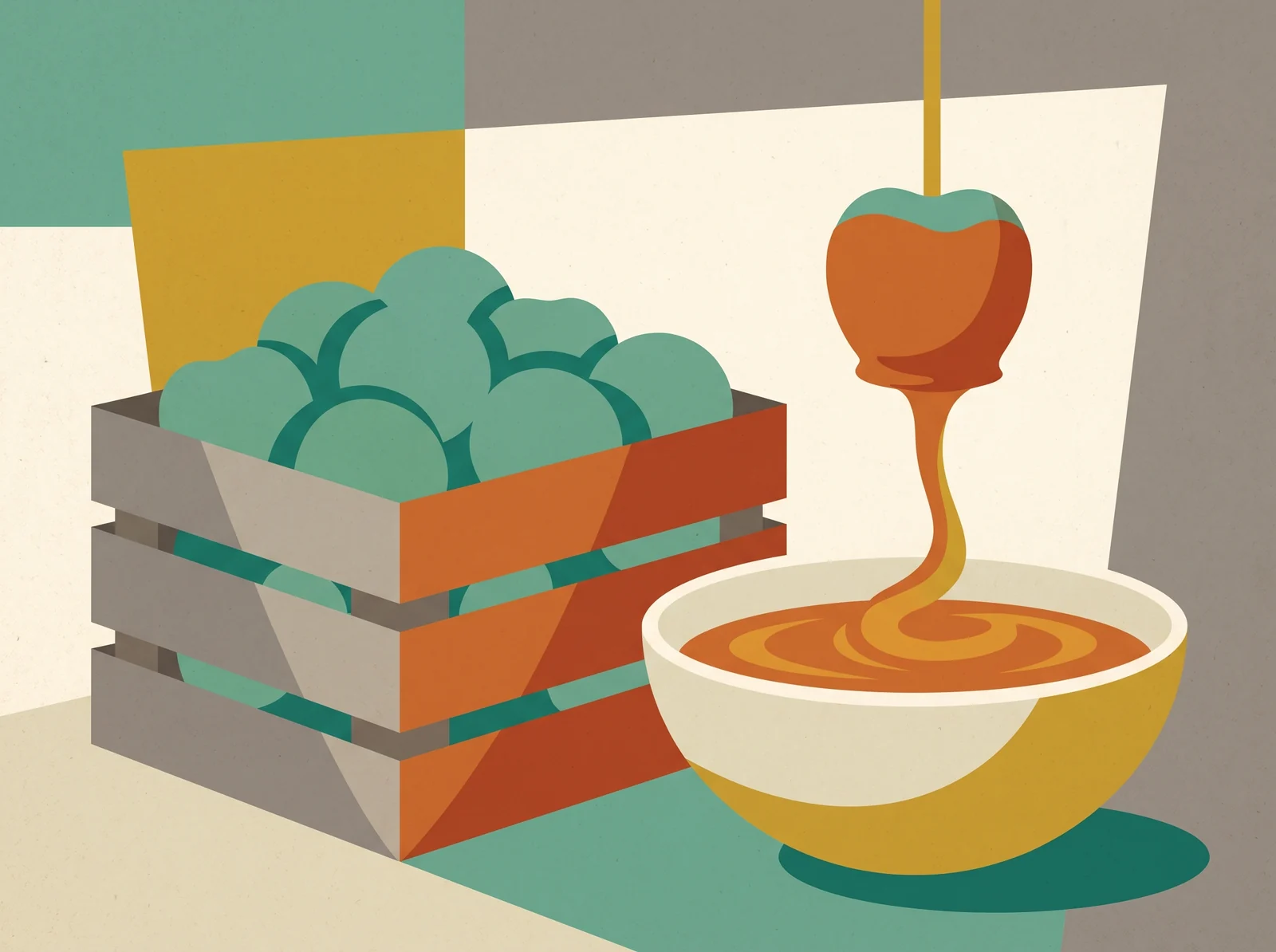
Granny Smith. Its tartness balances the sweetness of caramel and its dense flesh stays crisp under a warm coating. US Sweets uses 100-count Washington Granny Smith extra fancy — the same apple since 1980.
Three things an apple has to do
Not every apple survives being dipped. The coating goes on warm, sits heavy, and stays on for days. That rules out most of the produce aisle.
- Be tart enough to cut through the caramel, or the whole thing reads as flat sugar
- Be firm enough to stay crisp under a warm coating and for days afterwards
- Be the right size and shape — too large and the ratio is wrong, too irregular and the caramel pools
Why Granny Smith wins on all three
The acidity is the headline. Caramel is sugar and dairy; without something sharp underneath it becomes one-note. Granny Smith's tartness holds its own against a thick coating and against toppings as rich as chocolate and toffee.
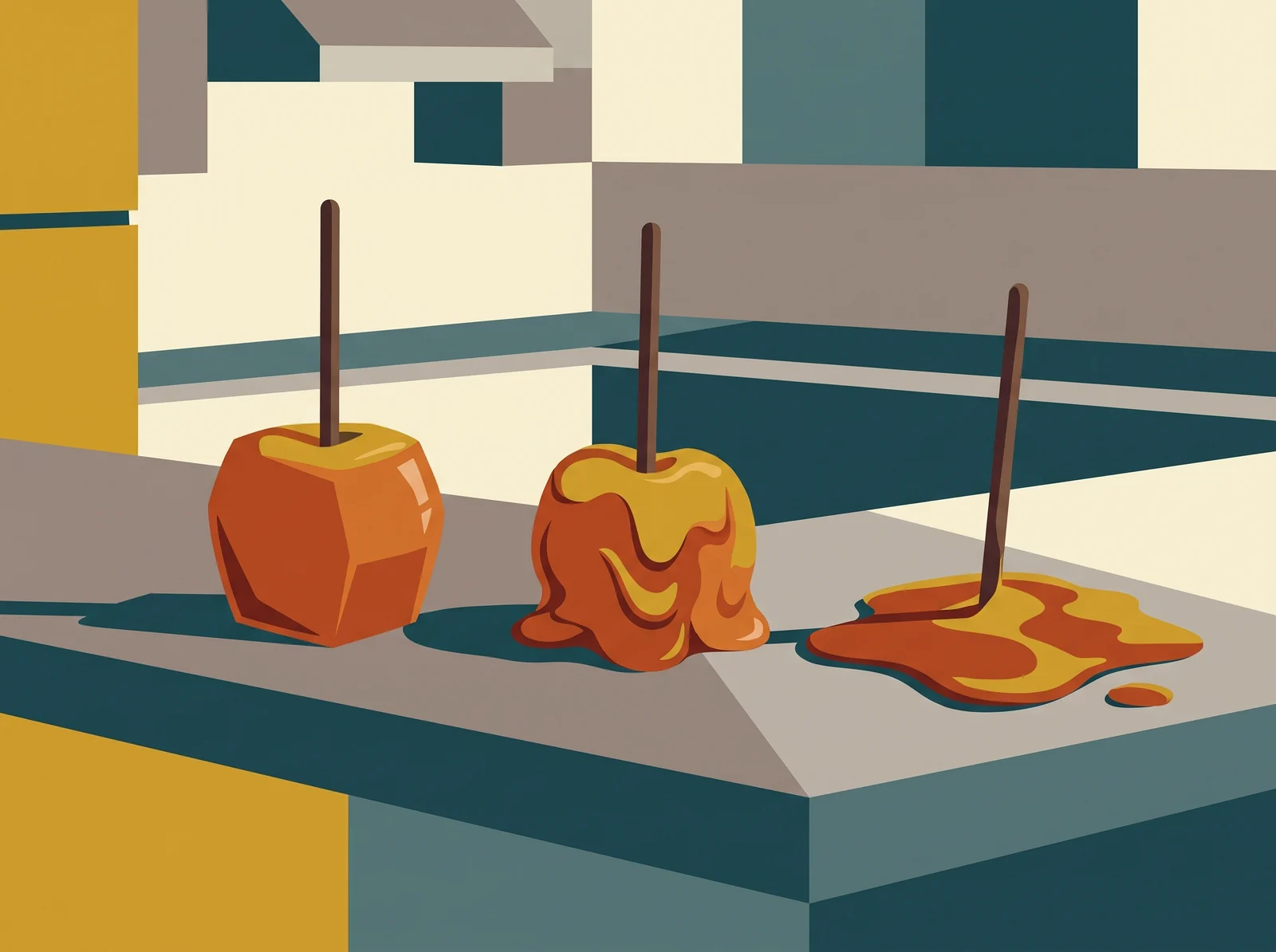
The flesh is unusually dense, which matters more than most people realise. Softer varieties begin to break down once warm caramel is applied and go mealy within a day or two. A Granny Smith is still crisp at the end of its storage window.
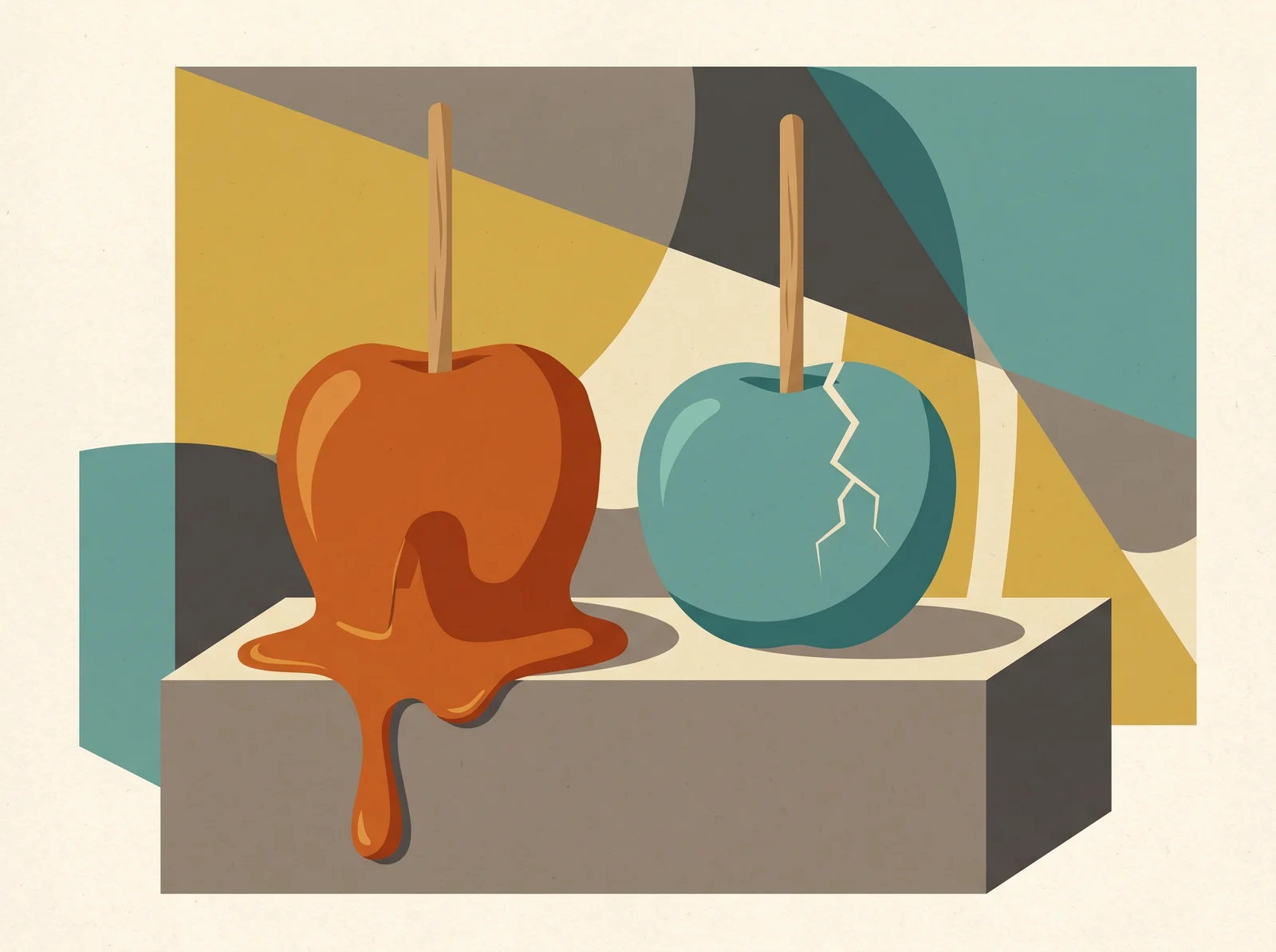
It also holds its shape. A uniform, slightly squat apple takes an even coat; irregular fruit leaves thin patches at the shoulder and a heavy pool at the base.
What "100-count extra fancy" means
Apples are graded and sold by how many fit a standard box. A 100-count apple is one of a hundred filling that case — big enough to feel substantial on a stick, small enough that the caramel-to-apple ratio stays balanced. Larger counts give you a snack; smaller numbers give you something closer to a doorstop.
"Extra fancy" is a US grade covering colour, finish and freedom from defect. For a product where the fruit's surface is the thing the coating has to grip, that finish is not cosmetic.
Ours come from Washington State, which grows the majority of the country's apples. We've used the same specification since 1980.
What about other varieties?
Honeycrisp and Fuji come up often. Both are excellent eating apples and both are sweet, which is precisely the problem — sugar on sugar. Honeycrisp in particular has a looser cell structure that doesn't hold up as well under a warm coating.
Some makers use Gala. It's firm enough, but it lacks the acidity, and the result tends to taste like caramel with an apple somewhere inside it rather than the two playing off each other.
Common questions
- What apples are best for caramel apples?
- Granny Smith. Its tartness balances the caramel and its dense flesh stays crisp under a warm coating.
- Why do caramel apples use green apples?
- Green apples — Granny Smith in particular — are tart and firm. The acidity cuts the sweetness of the caramel, and the dense flesh doesn't go mealy under a warm coating.
- Can you use Honeycrisp for caramel apples?
- You can, but it's sweet on sweet, and its looser flesh softens faster under warm caramel. A tart, firm apple gives better contrast and holds up longer.





 Made by Melbora