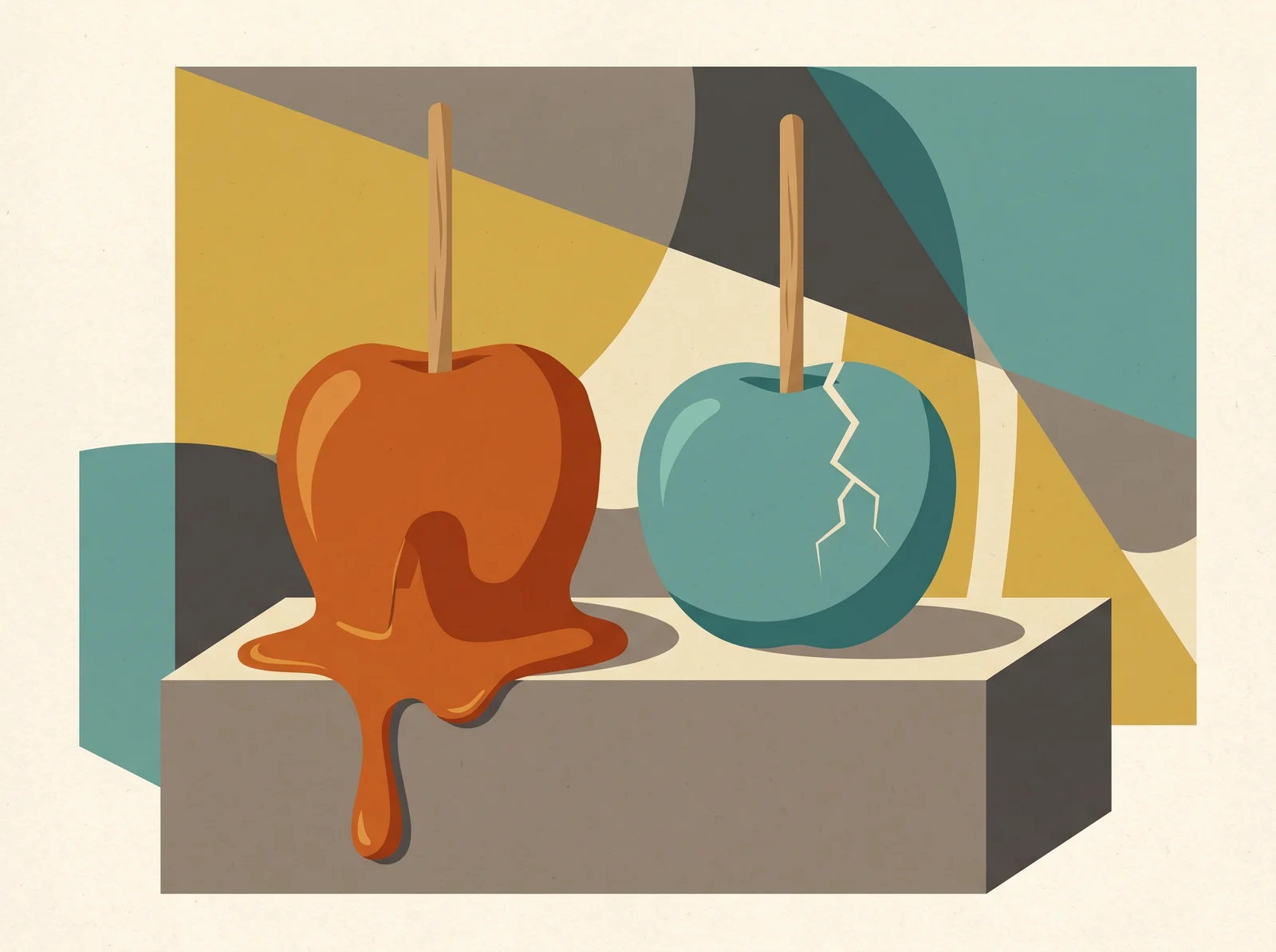
A caramel apple is coated in soft, chewy caramel made from sugar, butter and cream. A candy apple is coated in a hard sugar-syrup shell — traditionally red and cinnamon-flavoured — that sets glassy and cracks when you bite it. Same apple underneath, completely different eating experience.
The coating is the whole difference
Both start the same way: a whole apple on a stick. What goes around it is where they diverge.
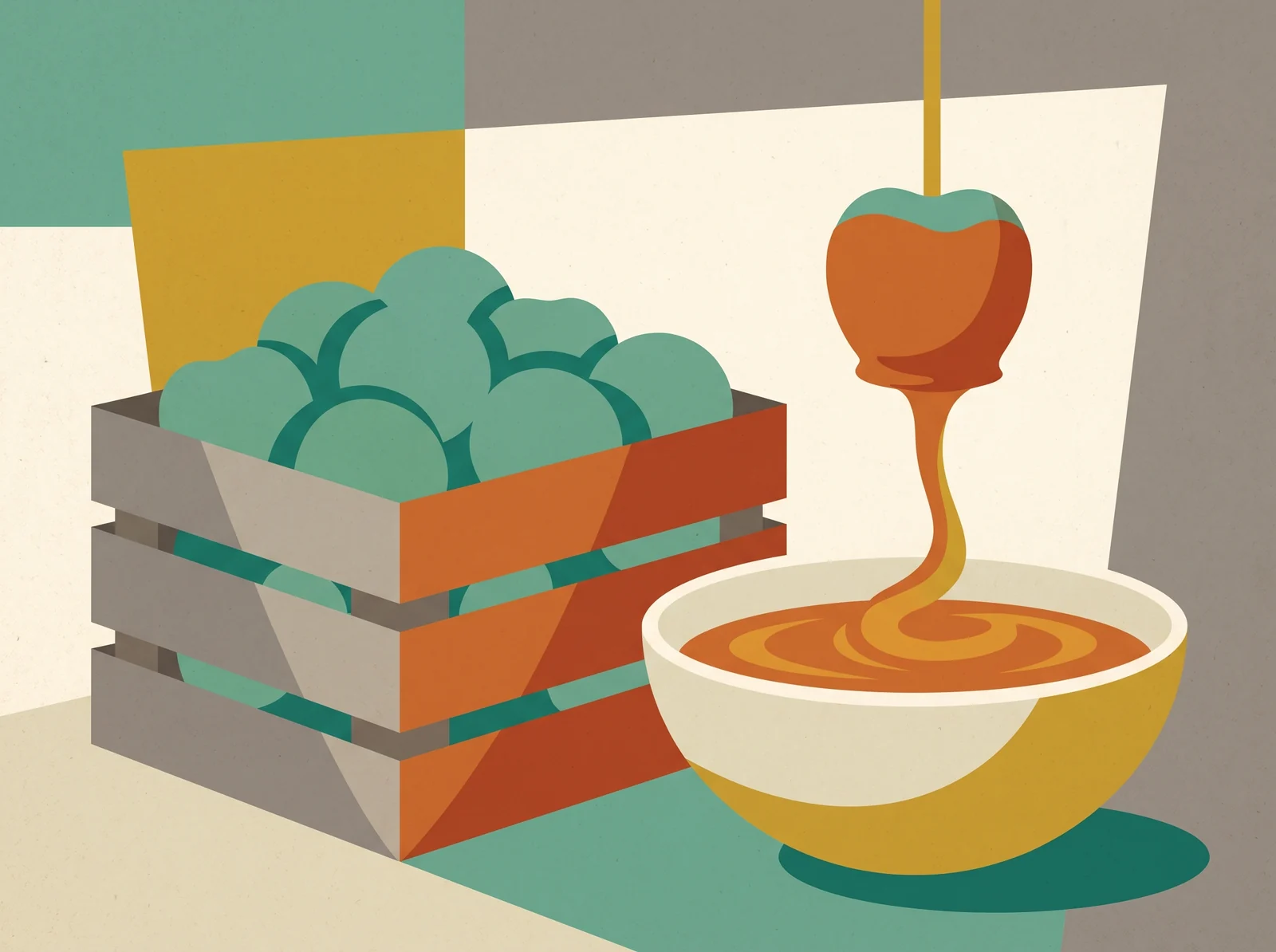
Caramel is cooked sugar with dairy — butter and cream — brought to a temperature where it stays pliable once cooled. It clings, it stretches slightly, and it stays chewy.
Candy coating is sugar syrup cooked to a much higher temperature, to what confectioners call the hard-crack stage, with no dairy. It sets into a thin glassy shell. The classic version is coloured red and flavoured with cinnamon.
How each one eats
A caramel apple yields. The coating gives under your teeth and pulls slightly away from the fruit, and because caramel contains dairy it reads as rich and buttery against the tartness of the apple.
A candy apple cracks. The shell shatters and the pieces come away, so you get a sharp burst of sugar and cinnamon followed by clean apple. It's a brighter, less rich experience.
Which apple suits which coating
We use 100-count Washington Granny Smith extra fancy for everything we make — the same apple we've used since 1980. Tart and firm is the right foil for both coatings, but for different reasons.
Under caramel, the acidity cuts through dairy richness that would otherwise be cloying. Under a candy shell, the firmness matters most: a softer apple goes mealy against the brittle coating and the textures fight each other.
Storage differs too
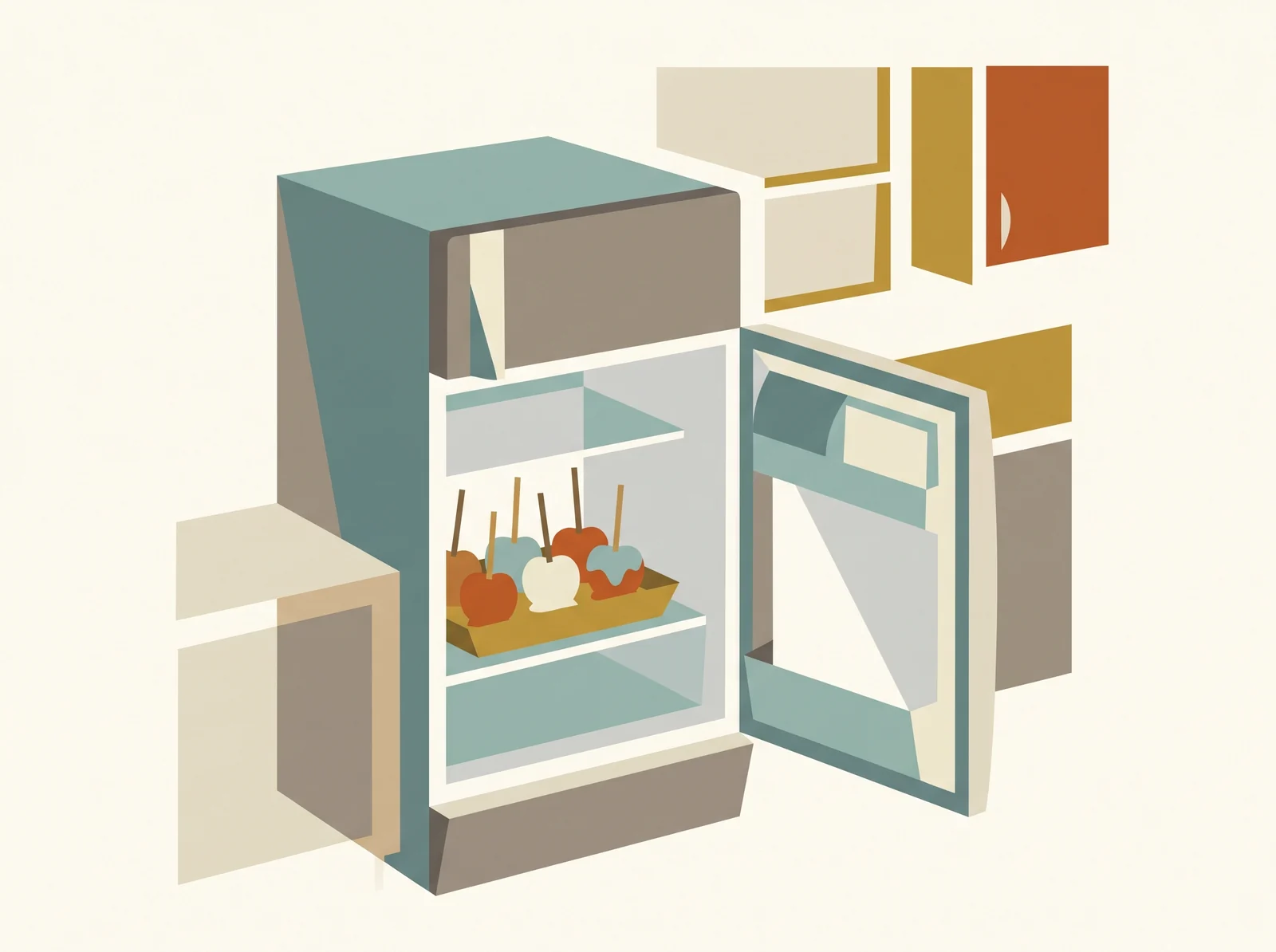
Caramel apples need refrigeration and keep about a week — the moisture drawn up by the stick sits under the coating, which is why that guidance exists.
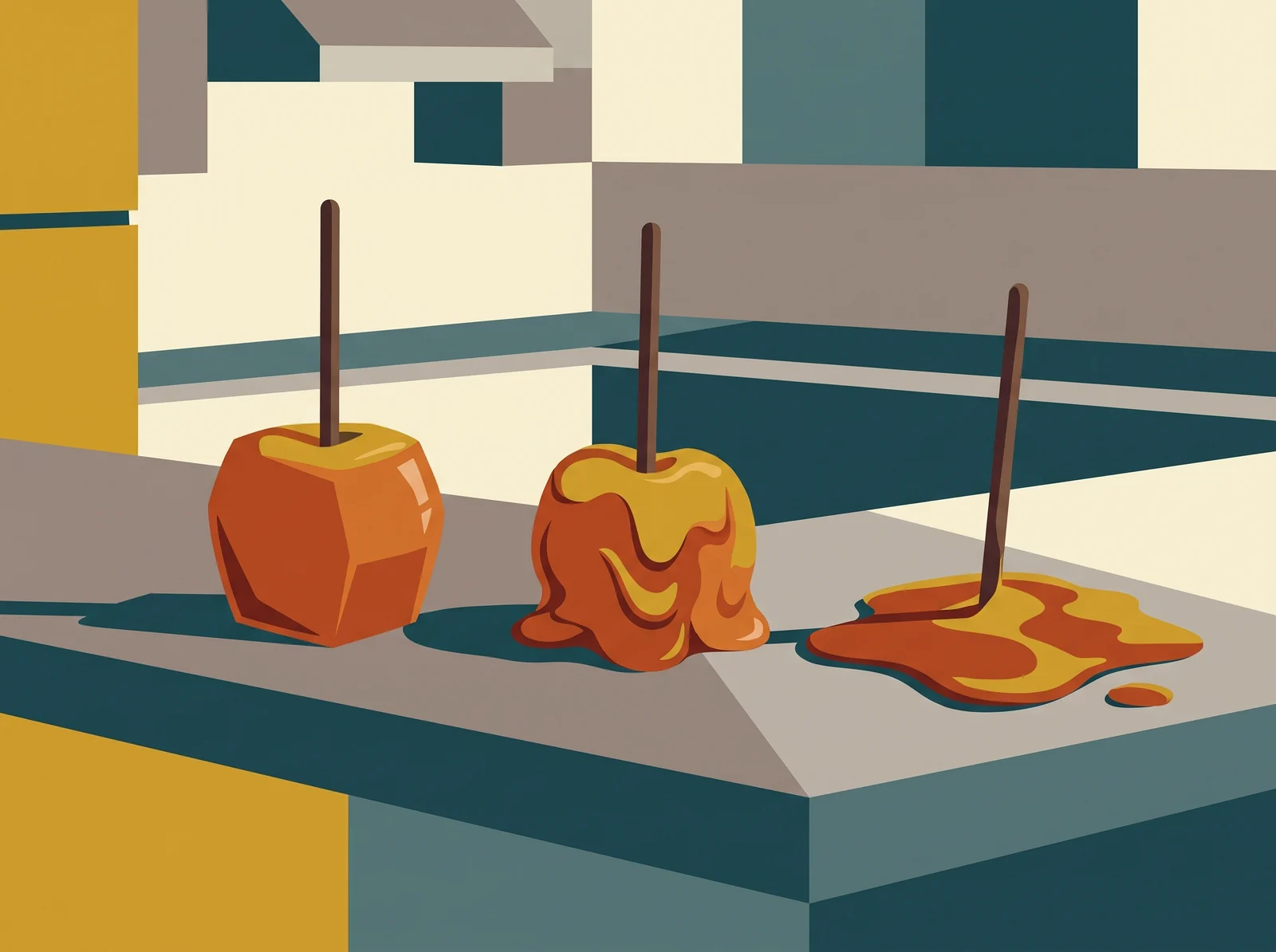
Both should be refrigerated once made, but the failure modes differ. A caramel apple softens as moisture migrates into the coating. A candy shell can weep and turn sticky in humidity, losing the crack that defines it.
So which should you order?
If you want richness, texture and something closer to a dessert, caramel. That's the bulk of what we make, across dozens of flavours from nuts to candy-bar toppings.
If you want the nostalgic county-fair version — bright, sharp, cinnamon-red — that's the candy apple. Ours is the Old Fashion Red Cinnamon, and it's one of the longest-running things we sell.
Common questions
- Is a candy apple the same as a caramel apple?
- No. A candy apple has a hard sugar-syrup shell, usually red and cinnamon-flavoured, that cracks when bitten. A caramel apple has a soft chewy coating made with butter and cream.
- Which came first, candy apples or caramel apples?
- Candy apples are the older of the two. The hard red cinnamon shell is the traditional form; caramel coatings came later.
- Do candy apples need to be refrigerated?
- Refrigeration is advised for caramel-coated and candied apples with sticks inserted, per University of Minnesota Extension guidance.


Sources
- Listeria and candied and caramel-coated applesUniversity of Minnesota Extension



 Made by Melbora